About
I came to live in a village in Cornwall in the late '60s when my parents returned from teaching English in Thailand. In 1979 we moved to Windmill Hill, South Bristol. This had two advantages - Dame Emily Skatepark (as we called it then) and, of course, a Music Scene.
Skating was a bit 'old hat' in the early 80's. Which was kinda cool, cause the few of us who were interested (four or five of us..!) just wanted to skate - so there was plenty of park for everyone. It's hard to imagine that level of disinterest today, where even rural Cornwall has skate parks!
Music was very much alive - a vibrant scene that was emerging from the success of bands like The Pop Group. And the local a BBC West arts television programme RPM (Rectangular Picture Machine), presented by Andy Batten Foster, gave away tickets to see the Stranglers at the Granary. And did this more than once.
All of which was ideal for an impressionable youngster with an interest in soundscapes, visual art, film making and live performance.

Impressionable Youngster
While at South Bristol Technical college I made an 8mm science fiction film that included sequences shot in the Concorde cockpit exhibit at Bristol Industrial Museum. Sadly all that now remains of the film are four still photographs of the spaceport, the spaceship and the service crane!
With my brother and a college friend we formed an alternative indie band called Blind Decor - ill advisedly named after a shop in Southville. I played drums. We rehearsed at Windmill Hill City Farm. We played Trinity and the Locarno. Some of our tracks were released on the Prime Cuts Cassette, alongside Decay Sisters, who later became the the Royal Assassins. One of our tracks from that cassette was featured on BBC Bristol's evening local music segment. Strangely we failed to set the world alight.
Sound work with Decay Sisters included a sessions as recording engineer on their unreleased track Mr Clean (I think I mixed the guitar level a bit over enthusiastically at the end of that solo..!). The photomontage in that video is largely made up of photos I took, developed and printed while at Filton Technical college. I was behind the mixing desk triggering rack mount effects when they were recorded by the BBC playing at Trinity Hall.
I created live light and film shows for Decay Sisters, Royal Assassins, Moist Relief, Shattered Silence and others. These were run from a scratch built desk including a custom circuit board I commissioned. This desk included a circuit-bent 8mm film projector controller that could auto-cue, scratch and cut film projections live. The films were specially made to enhance the live tracks. The Bristol Evening Post featured my work with the Royal Assassins, under my Arcane Machinery moniker.
I provided stage lighting for Jonathon Richmond and the Modern Lovers at a benefit gig for the Ashton Court festival. That was pretty funny. Jonathon "I don't want any lighting changes...". Computer controller "Oh, I'll just throw in one change for no apparent reason".
At some point during the 1980's I put in a short stint as drummer for the indie raving pop-blasters The Groove Farm. When they released their first 500 copy 7 inch DIY EP in 1986 we spent several hours in a flat in Totterdown drawing spirals on the white centre labels in coloured felt tip pen. These then whirled in, or out, of the centre hole as the record played. The track listing was printed on a single little white sticker ("this side/other side") stick on one side.
I also played in various collectives such as Some People. Several of these bands rehearsed on the top of floor of the McArthurs building on Spike Island, Bristol. This was where Tantric Designs printed the Glastonbury Festival t-shirts during the 80s. I did band photography for many of the bands mentioned, and these made their way to record covers, local television broadcasts and Venue Magazine.
As part of a fundraiser for the Bristol Sculpture Shed, which was housed in an aircraft hanger like industrial construction at the back of McArthurs yard. I provided an art installation lighting the inside of the huge arched corrugated iron roof with a computer driven multi coloured light display. Bristol Sculpture Shed was part of Artspace, now Spike Island Artspace Ltd.
Weekend tickets were £3.50.


The late great Chris Scott of Decay Sisters, Royal Assassins - suffering for my art.

I provided lighting for the event, which featured Talisman, Blue Aeroplanes (then featuring guitarist Angelo Bruschini, later of Massive Attack.). The Poet Milton delivered some excellent spoken word - and an off the cuff improvised weird man machine conversation with the floor spotlight...
During the mid 1980’s, I worked part-time as a studio technician at e+ music (emergency plus music!) recording studio which was one half of a redbrick semidetached house in the back of McArthurs Yard. This was owned by Chris Martin (more recently of Swamp Gods). Our band, Interference rehearsed there and it is where we recorded the track featured on a compilation vinyl LP ‘ Bludgeoned! A Collection’ alongside a number of Bristol bands including The Brilliant Corners and The Blue Aeroplanes. Interference supported 23 Skidoo at another of the Bristol Sculpture Shed Artspace fundraisers.
The whole e+ Music, McArthurs Yard, Artspace and Bristol Sculpture Shed scene was fantastic. Weird warehouse parties with a pile of live TV sets painted with red-lead all buzzing away in a heap in part of the huge warehouse, food and live bands. Hanging out on the flat roof section overlooking the undeveloped docks, smoking and drinking and dodging the seagulls who thought they owned the place. Various more or less below the radar musicians and artists in residence. Popping round to The Orchard after rehearsals for a cider. At that time it was a "working men's pub" frequented by the Brooke Bond Tea packing factory workers who lived near by. They seemed to take the denizens of McArthurs Yard completely in their stride.
One day a few of us went to look at an old former cargo ship that had just arrived and moored up near the Arnolfini. Two very enthusiastic ladies showed us round, talking excitedly about how this hold would be the dance studio, and that section the stage (but didn't have a proper floor yet...). This was, of course, the Old Profanity Showboat, shortly to become the now rather famous Thekla.

Mc Arthurs Yard, Gas Ferry Road, Bristol in the 1980s

Bludgeoned! A Collection
During this period I built my first home studio. This based around a Fostex X15 4-track tape machine along with kit built rack mount effects such as compressors and parametric EQ. These seemed pretty exotic at the time and kit building was the only way to make them affordable!
During my time at Filton Technical College, I had an introduction to the home computers of the day. Quite how that related to a Foundation in Photography Film and Television I'm still not entirely sure...
I was soon soldering together add ons to a Commodore 64. These included adding a Vox Continental key bed that came from second hand shop in North Street, Bedminster. I wrote a software driver to map the key presses into the internal software queue. I added two Commodore 64 sound expansion cartridges - the SFX Sound Expander FM synthesis cartridge, and 8 bit(!) SFX Sound Sampler.
The FM module had a software bug caused by the difference in TV synchronisation frequency timings in the UK compared to the US. This made it randomly generate wild squawking noises after every few key presses. I reverse engineered the software and put in a fix. While I was at it, I went on to write a software extension to allow modification of the FM voices to alter the sounds.
My brother lent me his Roland SH 101, Chris Martin a Roland Drumatix TR 606 and with some other bits of outboard gear, I began my exploration of electronic music. You can here some of it on an Arcane Machinery EP on Soundcloud.
I moved back to Cornwall in 1989, working in my father’s antiques business. His speciality was mechanical music, including His Masters Voice clockwork wind up gramophones, Edison cylinder phonographs, music boxes, EKCO Bakelite radios and old television sets. I was responsible for restoring the mechanical workings of these devices and sympathetically refinishing the horns and cases. We also sold 78 records and phonograph cylinders. My favourite 78 for testing the gramophones was Bad Penny Blues by Humphrey Littleton. I still have a copy of this and several other jazz 78s. Also a wind up HMV 192 floor standing gramophone.
Since around 2000, I have combined digital filmmaking and a DMX LED stage lighting and multi projector Video VJ rig putting on shows across Devon and Cornwall - including Maker Festival (much missed!), Patchwork Studios, and the Voodoo Lounge (upstairs at the Pheonix Exeter) with the Swamp Gods.
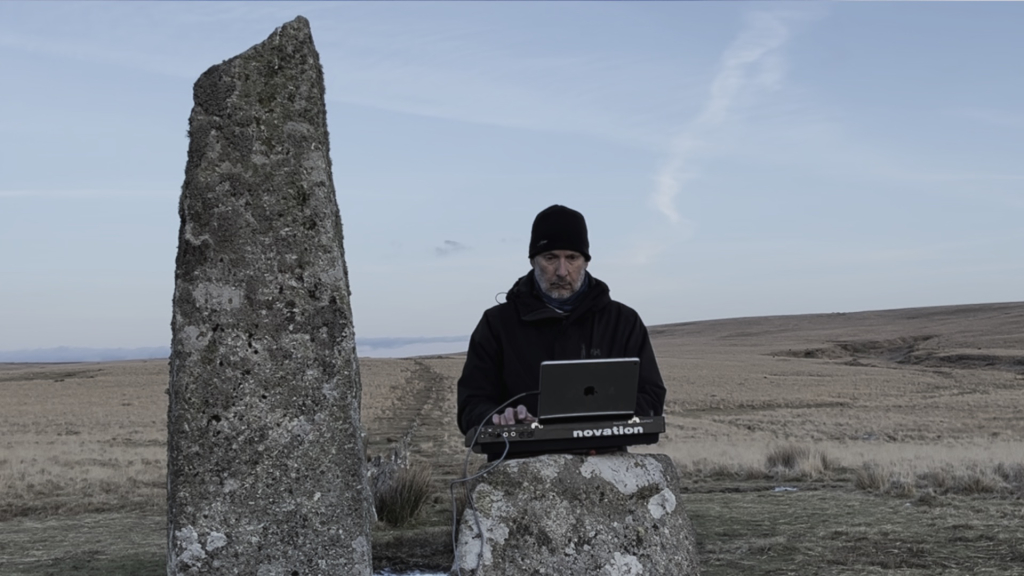
I have been making electronic music as Pehr Torsten since 2015. Much of this is 'in the box' using the usual suspects, including Logic, Mainstage, Halion, Reaper, Padshop Pro with Novation SL Compact keyboards. Tracks are available on Soundcloud and Bandcamp.
From 2018 I played bass and guitar in the band Storm Machines creating "swirling, looping phasing soundscapes of beat driven off beat poetry brought to you via Tanzania, Manchester, Windmill Hill and the Cheesewring". Tony Glass of First Class Magazine described us as "a three piece electronic outfit from Cornwall creating a dark and experimental sound enhanced with dystopian lyrics".
We released the ‘Cloud Stack Horizon’ EP ( CD and Digital 2VU/MEDIA 2VU-CD01 2019). I made various videos that you can see on our YouTube Channel. I like to think of these as "short films with music". There are also videos of our live set featuring atmospheric stage lights and projections.
In 2019 I made a short film in support of a Cornish school's successful environmental campaign to stop the Red Nose Day noses being made of plastic. This won the support of David Attenborough, who wrote them a personal letter. The BBC used some of my film in their coverage of the campaign.
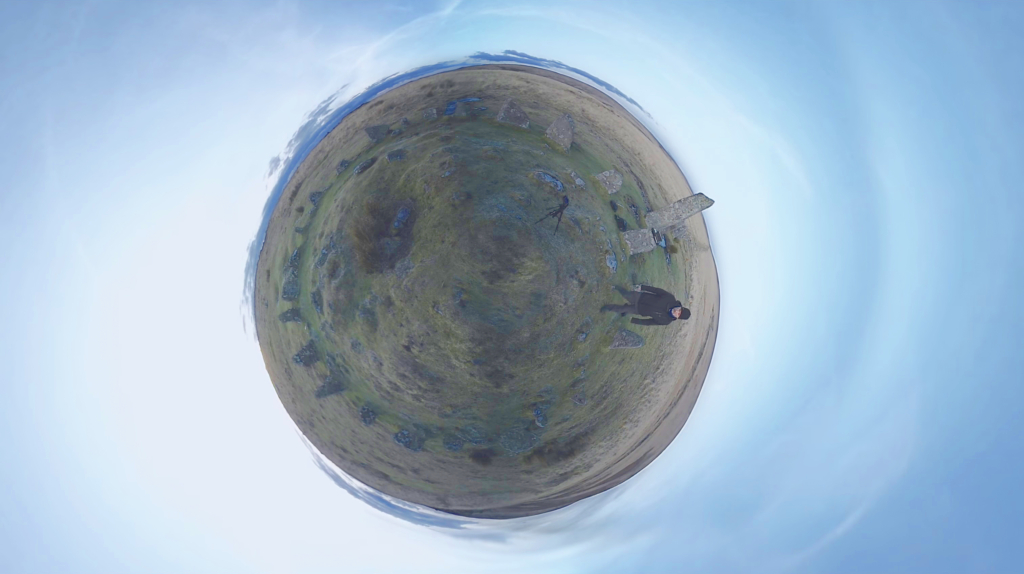
Since 2024 I have been working as Pehr Torsten on Microperformances - improvised pieces of music performed as a one-off in an environment, like an audio postcard of a time and place. These include an immersive element that uses 360 degree video alongside Ambisonic 360 degree surround audio.
As part of the SOL Microperformance, which centred around the winter solstice, I created Decent Sampler instrument using 40 days of solar radar data measuring changes in the sun’s surface. This was sped up 42,000 times to bring it into the audible range. Two of these data sets were loaded into Steinberg’s Padshop, tuned to a musical note and granular synthesis used to create deeply textural endless morphing waveforms. You can download it for free here.

Swamp Gods

Storm Machines

Microperformance set up at Hingston Hill, Dartmoor